

As Indian cities keep expanding, waste management is getting a bit more complicated. It can be hard to keep up with everything day to day. In that messy reality, AI based solid waste monitoring in India is starting to help municipalities. It helps follow collection schedules, spot waste hotspots earlier, tweak routes, monitor bins that are getting overloaded, and use field staff and equipment in a smarter, more coordinated way.
Basically, AI-based solid waste monitoring uses computer vision, machine learning, predictive analytics, and IoT sensors, and together they turn big piles of operational data into information that matters. AI can recognise litter in the monitored places, detect when bins are overflowing before it turns into a bigger issue, analyse collection patterns, and assist with route planning that’s less chaotic. IoT devices then bring in real-time status from bins, garbage trucks, and other equipment out in the field, so the system isn’t relying only on old records.
Also, the need for this kind of monitoring isn’t slowing down. The World Bank’s What a Waste 3.0 report says the world produced 2.56 billion tonnes of municipal solid waste in 2022, and it’s projected to climb to 3.86 billion tonnes by 2050 if things continue the same way. That’s a lot of pressure, especially for places already stretched thin.
So for Indian cities facing higher waste volumes and limited municipal resources, more reliable monitoring can be a key step towards improving the everyday routine of waste operations.
What Is AI-Based Solid Waste Monitoring?
AI-based solid waste monitoring basically means artificial intelligence is used to study data that comes in from places like CCTV cameras, GPS units, IoT sensors, phone apps, and also municipal databases. From all of that, the system is able to spot trouble spots like bins that are overflowing, loose litter, areas where the collection got missed, and maybe routes that are not working efficiently; it depends on what kind of tech they set up in the first place.
After that, AI can assist with choosing what to react to first, forecast how much collection will be needed, and give practical insight for smarter scheduling and planning. When this is paired with IoT, waste collection doesn’t have to stay stuck to a rigid timetable; it can become more responsive and adaptive in real operations.
In India, NITI Aayog has already written up examples from Varanasi and Visakhapatnam where AI along with IoT is used for cleanliness oversight, smart bins that report, sensor-linked routing, and municipal decision support.
What Is an AI-Based Waste Collection System?
An AI-based Waste Collection System sort of uses artificial intelligence to help with decisions about garbage pickup and monitoring, though the details really depend on how the system is put together.
Some setups rely on computer vision to catch litter or overflowing bins using CCTV cameras, and other versions lean on machine learning to forecast waste generation or spot collection habits. In addition, AI can be paired with GPS and IoT signals to assist in route planning, even if the route logic is a bit more complex than it sounds.
The result quality still depends on data quality, the overall system design, and how municipal teams actually use the information day to day. Recent research on AI in Indian solid waste management also points out that data accuracy, budget and cost constraints, plus real-world rollout issues matter a lot when assessing these systems.
How AI Is Used in Solid Waste Monitoring
AI can help with several bits of the waste management process. How useful it is depends on what data is actually available and what the municipality wants to fix, solve, or at least improve.
AI for Litter and Overflow Detection
Using computer vision, it can analyse pictures or even CCTV footage to spot what looks like sanitation trouble. Like it can be trained to recognize litter on roadways, overflowing garbage bins, or waste that piles up in monitored spots. When it spots an issue, it can send an alert to the team that is responsible.
NITI Aayog has written about this kind of setup in Varanasi, where AI video analytics work alongside the existing CCTV infrastructure to track things like littering, overflowing bins, and also missed waste pickups.
AI for Collection Route Planning
Collection routes get disrupted by traffic, waste volumes, road conditions, and also the demand that changes over time.
AI can look at past collection records, together with vehicle details and route info, to flag inefficient routes and support smarter scheduling.
This is especially handy for large urban waste management solutions, where even small improvements across a big fleet can, in the end, reduce fuel consumption and shorten collection time a bit.
AI for Predicting Waste Collection Needs
Waste generation is not really the same every single day.
Markets might dump out more waste on specific days. Residential areas can show different rhythms on weekends or during festivals. Commercial areas may have different pickup needs compared to residential neighbourhoods.
Machine learning models can study historical data to detect these patterns, so municipalities can plan collection capacity and resources more calmly.
AI for Waste Classification
AI using computer vision can also identify and categorize different kinds of waste based on what the system sees.
Research has explored machine learning and computer vision for separating materials into categories such as organic and recyclable waste. This can support sorting and resource recovery, although real-world performance depends on the quality of images, training data, equipment, and operating conditions.
How Waste Management Solutions Using AI and IoT Work
AI really starts to be useful once it has dependable data to analyse, and not just random bits. That’s where the Internet of Things, or IoT, steps in, because it can actually gather the information in the real world.
With IoT, devices can pull up information from physical assets and then send it over to some central platform. In waste management, that may mean fill-level sensors put inside bins, GPS devices fitted to collection vehicles, RFID systems, and a few other connected tools that keep chatting in the background.
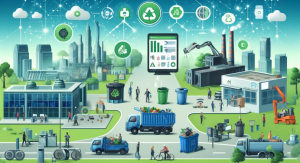
The whole cycle is sort of easy, like
IoT collects information → AI analyses the information → municipal teams take action from the insights.
For instance, a bin that’s IoT-enabled can report that its fill level keeps going up. Then AI can mash this up with earlier collection records and also the data from neighbouring bins, to help figure out if pickup might be needed soon, or maybe later.
Visakhapatnam is one Indian example that NITI Aayog has documented. In that setup, the smart bin network relies on fill-level sensors, RFID-based tracking of assets, GPS-enabled route optimisation, and real-time dashboards. NITI Aayog says there’s about a 20–30% improvement in pickup efficiency and around a 15% reduction in sanitation complaints from those described initiatives.
Still, those numbers are tied to the specific documented projects, so they should not be treated as a guaranteed result for every municipality out there.
Benefits of AI Waste Management Solutions in India
When they are implemented around some clear operational need, AI waste management solutions in India can bring a bunch of benefits that make everyday work a bit easier and also slightly more precise.
- For monitoring, municipal teams can spot sanitation issues without leaning entirely on manual checks and inspections, which is good especially when schedules get busy or weather gets in the way.
- For response speed, automated alerts can help teams act sooner on overflowing bins, litter build-ups, or even when a collection point gets missed, even if nobody notices right away.
- For route planning, AI has a way to look at collection data and point out routes that are not really working well, plus it can track changing demand patterns over time.
- For resource use, municipalities can make steadier decisions about vehicles, manpower, and collection timetables, instead of relying on guesswork or outdated assumptions.
- For data that actually helps, AI doesn’t just keep records; it can also surface recurring patterns that might not be obvious through normal manual reporting, so the bigger story comes into focus.
- For accountability, digital trails from GPS, sensors, cameras, and mobile applications offer a clearer view of what happens out in the field, so responsibility becomes more traceable.
What Are the Challenges?
AI is not some magic shortcut around the basic waste management headaches. A municipality still needs dependable collection infrastructure, trained people, solid data, and clear day-to-day operating procedures. Even if AI sounds fancy, if sensors stop working, or the data is patchy, the whole system may end up giving results that are, you know, not that useful.
Then there’s cost, too. Cameras, sensors, connectivity, the software itself, ongoing maintenance, and training all take real money and time. So cities should really figure out the exact issue they’re trying to solve first, before picking any technology, any tech at all. Otherwise it can turn into an expensive experiment.
Privacy also can not be ignored, especially when cameras or other monitoring bits show up in public spaces. There have to be sensible rules in place about how data is gathered, who can access it, how long it’s kept, and how it’s protected from misuse or breaches. Otherwise “responsible data use” becomes just a phrase.
Most importantly though, AI suggestions still need human oversight. Sanitation teams understand local conditions that a model might miss, like temporary road closures, festivals, construction activity, or those odd, unexpected events that pop up.
So the best approach is not AI instead of people, but AI helping people with better information, and maybe fewer surprises.
The Future of AI Based Solid Waste Monitoring in India
The future of waste monitoring probably gets more connected and more predictive, kind of like it can see problems before they show up. Rather than waiting for some complaint about an overflowing bin, a city might pinpoint the spots that are likely to overflow, then plan the collection ahead, without the usual rush. And instead of manually checking how each truck is doing, AI could surface routes that keep hitting delays or show odd patterns in fuel usage.
There’s also the angle of Digital Twins and more advanced analytics, where municipalities can simulate different collection scenarios before they actually tweak operations. Like test drive first, then decide.
Recent work backs this direction too. A 2025 review covering AI and IoT in urban solid waste management reported uses across collection, sorting, recycling, prediction, and process optimisation, but it also pointed out that funding and the practical rollout effort can still be pretty tough.
For India, honestly, the opportunity is big. The real challenge is turning all of this into something practical, affordable, reliable, and matched to the realities of each city.
Conclusion
AI based solid waste monitoring in India is quietly changing how municipalities can get a handle on waste collection. Instead of just leaning on fixed schedules and manual reports, many cities are using cameras, IoT sensors, GPS, and AI so they can watch the whole operation and spot trouble faster than before, kind of in real time.
For AI waste management to work well, you still need dependable data, the right infrastructure, teams that are trained properly, responsible data practices, and operational goals that are really clear and measurable.
Convexicon’s AI- and IoT-enabled waste management solutions can make it easier for municipalities to monitor collection activities, track vehicles, share and sync field data, and also get much better visibility from one central platform. Our AI-based monitoring, plus GPS, QR, RFID, and IoT integrations, with the idea being to help municipal teams decide smarter using reliable operational data.
Reach out to our team to explore an AI-enabled waste monitoring solution for your city or for your waste management operation.
Frequently Asked Questions
What is AI-based solid waste monitoring in India?
AI based solid waste monitoring in India is basically one of those setups where artificial intelligence tries to read what’s happening around the city using cameras, sensors, GPS gadgets, and a few other connected systems. It can support municipalities in catching waste-related issues early, keep an eye on how collection is going, look at repeating behaviours, and also make operational plans feel more “on point” rather than purely based on guesses.
How does an AI-Based Waste Collection System work, though?
Usually it grabs signals and records from IoT sensors, GPS devices, cameras, plus historical collection notes. Then the AI steps in to make sense of it all, finding patterns, estimating when and where pickup is actually needed, and helping design better routes, along with more careful use of manpower and vehicles. Sometimes it even adjusts planning when conditions change.
What are AI waste management solutions?
These are digital tools, more or less, that rely on artificial intelligence to do things like waste detection, route planning, classification of waste, demand forecasting, and also ongoing collection monitoring. In simple terms, it’s software that turns raw observations into decisions.
How can AI waste collection monitoring improve?
It can flag overflowing bins, scattered litter, places that got skipped during collection, route movements that look unusual, and shifts in how much waste is showing up over time. So municipal teams can react using current info instead of only following fixed calendars.
How do AI and IoT work together in waste management?
IoT usually gathers the on-site data from physical things like bins and vehicles. AI then takes that incoming stream and analyses it to recognise patterns and support better choices. So in practice, waste management solutions combining AI and IoT tend to deliver more responsive operations, and the whole process feels more data-driven than before, even if the city routine is still kind of messy sometimes.