

Keeping attendance in control is one of the biggest operational challenges for staffing and manpower firms. When teams are scattered across several client locations, shifts , and ongoing projects, it quickly turns into a messy situation, like you’re guessing instead of knowing who’s actually there.
In a lot of situations, staffing agencies still lean on manual attendance routines, supervisor sign-offs, WhatsApp pings, or biometric devices sitting on site. Sure, those approaches might work for smaller groups, but once you scale up, they’re hard to run smoothly, and the whole thing starts to drag.
Problems usually start appearing in the form of:
- proxy attendance
- delayed attendance records
- payroll mismatches
- disputes around working hours
- lack of visibility across multiple locations
For staffing companies, these issues directly affect operations, client trust, and profitability.
This is where Face recognition attendance systems for manpower and staffing companies are becoming increasingly important. Instead of relying on manual processes, staffing agencies can now automate attendance tracking using AI-powered facial recognition technology.
The biggest advantage is not just attendance marking, it is visibility, accuracy, and control across distributed workforce operations.
Why Traditional Attendance Systems Create Problems for Staffing Companies
Unlike regular office environments, staffing companies manage people across different sites at the same time.
A single staffing agency may handle:
- security personnel
- housekeeping staff
- warehouse workers
- drivers and field teams
- manufacturing manpower
- retail and facility management staff
All of them may report to different locations with different shifts.
This creates a major challenge:
How do you verify attendance accurately across multiple sites every day?
Traditional systems struggle because they depend heavily on manual intervention.
Some common issues include:
- supervisors marking attendance on behalf of workers
- delayed attendance updates from sites
- buddy punching or proxy attendance
- difficulty managing shift changes
- attendance manipulation during payroll cycles
For manpower companies, even small attendance errors can lead to:
- salary disputes
- client escalations
- compliance issues
- revenue leakage
This is why many agencies are now investing in Facial Recognition Attendance System in India solutions to make workforce tracking more reliable.
What Is an AI Powered Face Recognition Attendance System?
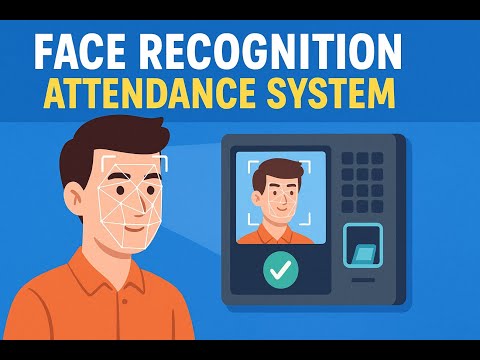
A Facial recognition Staff attendance system uses AI and facial recognition technology to verify and record attendance automatically.
Instead of cards, fingerprints, or manual registers, attendance is marked through face verification.
The process is simple:
- the employee stands in front of the device or mobile application
- the system matches the face with registered records
- attendance is marked instantly
The system captures:
- employee identity
- time of attendance
- location
- shift details
This creates a secure and tamper-resistant attendance process.
For staffing companies, this means attendance can be verified across multiple client locations without depending entirely on site supervisors.
Why Staffing Companies Are Moving Toward Face Recognition Systems
The staffing industry operates on scale. Once workforce numbers increase, manual attendance management becomes difficult to sustain.
This is why Face recognition attendance systems for manpower and staffing companies are becoming more common across industries.
The biggest reason is accountability.
Staffing agencies need to answer critical questions every day:
- Did the employee actually report to the site?
- Was the correct shift followed?
- Were the working hours accurate?
- Is the attendance data reliable enough for payroll and billing?
Without accurate attendance, everything else becomes difficult to manage.
AI-powered attendance systems help solve this by creating a digital attendance trail that is difficult to manipulate.
How Face Recognition Attendance Works in Staffing Operations
The strength of AI-powered attendance systems is that they fit naturally into field operations.
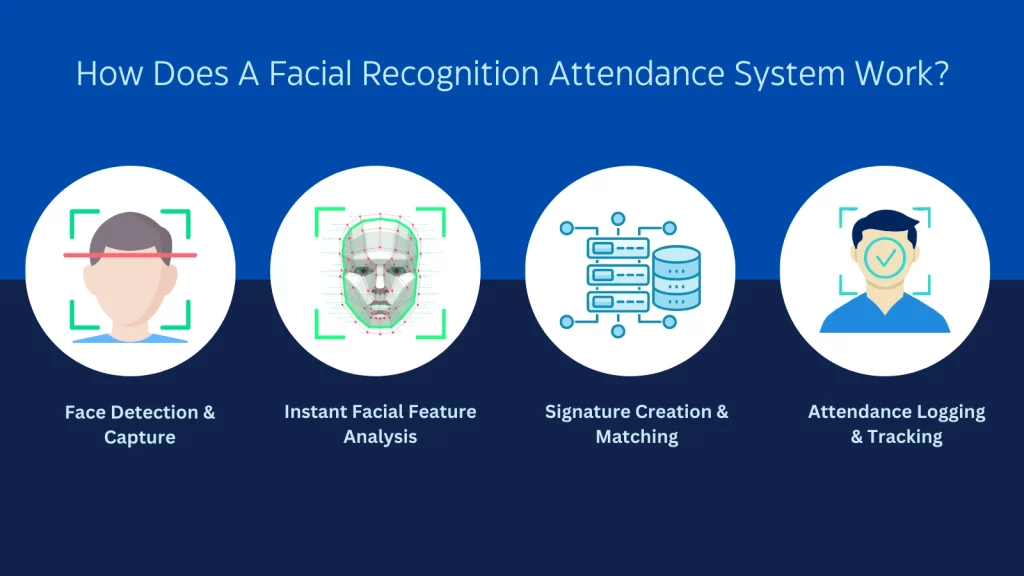
Employee Registration
Each employee’s facial data is registered securely in the system.
This creates a unique identity linked to:
- employee ID
- department
- client site
- shift assignment
Attendance Verification at Site
When employees arrive at the site:
- they scan their face using a device or mobile app
- the system verifies identity instantly
- attendance is marked automatically
This removes the need for manual registers.
Real-Time Attendance Tracking
Supervisors and managers can view:
- who has reported
- who is absent
- delayed reporting
- shift attendance status
all in real time.
Location-Based Verification
Many systems also support geo-tagging and GPS verification.
This ensures:
- attendance is marked only from approved locations
- employees are physically present at the assigned site
This is especially useful for field teams and remote deployments.
Automated Attendance Records
Attendance data is stored digitally and can be integrated with:
- payroll systems
- HR software
- shift management tools
This reduces manual work and improves accuracy.
Key Benefits for Staffing and Manpower Companies
A Facial Recognition Attendance System in India offers several practical benefits for staffing agencies.
Eliminates Proxy Attendance
This is one of the biggest advantages.
Since attendance is linked to face verification:
- buddy punching becomes difficult
- fake attendance entries are reduced
- site-level manipulation decreases
Improves Payroll Accuracy
Incorrect attendance often creates payroll disputes.
With automated attendance:
- working hours are recorded accurately
- overtime calculations become easier
- salary processing becomes more reliable
Better Client Transparency
Clients often want proof that deployed staff actually reported.
With AI-powered systems:
- attendance records are verifiable
- reporting becomes transparent
- trust improves between staffing agencies and clients
Real-Time Workforce Visibility
Managers can monitor workforce status across multiple sites from a central dashboard.
This helps identify:
- absenteeism
- delayed reporting
- understaffed locations
before they become operational issues.
Reduces Administrative Work
Manual attendance management consumes time.
AI-powered systems reduce:
- paperwork
- manual data entry
- attendance reconciliation efforts
This allows teams to focus more on operations.
Why AI Makes These Systems More Effective
Traditional biometric systems depend heavily on fingerprints or cards. These methods often create issues in field environments.
For example:
- workers may wear gloves
- fingerprints may not scan properly
- cards may get lost or shared
AI-powered facial recognition solves these problems.
Modern AI systems can:
- recognize faces quickly
- work across different lighting conditions
- detect duplicate attempts
- improve matching accuracy over time
This makes the system more reliable for large-scale staffing operations.
Industries Where Face Recognition Attendance Is Growing Fast
The demand for Face recognition attendance systems for manpower and staffing companies is increasing rapidly across industries that manage large, distributed workforces. In these sectors, attendance is not just about marking presence, it directly affects operations, payroll, compliance, and client reporting.
Industries such as:
- facility management
- security services
- logistics and warehousing
- manufacturing
- construction
- retail staffing
- healthcare support services
Businesses are increasingly adopting AI – powered attendance systems to improve workforce visibility and also reduce manual dependency, more or less. For instance, in security and facility management companies, employees get deployed across multiple client sites and shifts. Supervisors often have trouble verifying if guards or housekeeping staff really reported on time.
In logistics and warehousing, shift – based manpower changes happen a lot, so manual attendance becomes difficult to handle with any real accuracy. Likewise, construction and manufacturing companies see large worker movements every day , and even small attendance errors can turn into payroll headaches and compliance issues, pretty quickly.
That’s why many organizations are moving toward a Facial Recognition Attendance System in India, solutions that enable real-time tracking, automated reporting, and stronger workforce accountability across different locations.
Challenges Staffing Companies Face Without Smart Attendance Systems
Without a reliable attendance system, staffing companies often face operational gaps that slowly affect both profitability and client trust.
Manual attendance methods may seem manageable initially, but once workforce sizes increase across multiple locations, problems become difficult to control.
Some of the most common challenges include:
- attendance disputes between workers and supervisors
- incorrect payroll processing due to manual errors
- lack of visibility across multiple client sites
- delayed attendance reporting from field supervisors
- proxy attendance or buddy punching
- client dissatisfaction caused by inaccurate staffing records
- operational inefficiencies during shift management
For staffing companies, these problems create a chain reaction.
A small attendance mismatch can lead to:
- payroll disputes
- overtime calculation errors
- billing inconsistencies
- compliance issues with clients
In many cases, managers spend hours verifying attendance records manually instead of focusing on operations and workforce planning.
As manpower deployments grow, traditional attendance methods simply cannot provide the level of accuracy and control needed. This is why many staffing agencies are now investing in AI-powered Facial recognition Staff attendance system solutions that automate attendance tracking and reduce dependency on manual verification.
The Future of Attendance Management in Staffing Operations
Attendance management is no longer just an HR process. For staffing and manpower companies, it has become a critical operational control system.
When teams are spread across multiple client sites, shifts, and locations, attendance directly impacts:
- payroll accuracy
- client billing
- workforce productivity
- compliance reporting
- overall operational efficiency
This is why staffing companies are now moving away from manual attendance methods and investing in AI-powered systems that provide real-time visibility and automation.
Future-ready manpower companies are actively looking for solutions that offer:
- real-time workforce visibility
- AI-powered attendance verification
- centralized monitoring across multiple sites
- automated reporting and payroll integration
- location-based attendance validation
- stronger compliance and audit support
The shift is already kinda visible across the world.
The larger face recognition market is also growing fast as businesses move toward AI-driven workforce oversight systems. According to industry estimates, the global facial recognition market is expected to grow from nearly USD 9.3 billion in 2025 to around USD 36.7 billion by 2035, which really shows how quickly organizations are adopting AI-powered verification and attendance tooling.
The demand is rising, especially in sectors handling distributed teams, where attendance accuracy kinda directly impacts day-to-day operations and payroll. Reports also suggest that about 40% of workplaces globally already use facial recognition tech for employee management, and for security-related purposes as well.
In India, the adoption is becoming more noticeable in big workforce operations, slowly but surely. For example, the Nagpur Municipal Corporation put a face recognition attendance setup in place for sanitation workers, and it surfaced noticeable attendance and on-the-ground presence gaps across zones , so management then moved toward stricter workforce monitoring and stronger accountability steps.
One major reason behind this growth is the increasing need to eliminate :
- proxy attendance
- delayed reporting
- payroll mismatches
- manual attendance manipulation
AI-powered systems are quietly helping companies cut down payroll mistakes, boost workforce transparency , and run distributed teams with a little more control. Some reports say that AI-driven workforce tools can meaningfully reduce payroll inconsistencies and attendance-related missteps, too.
Basically, staffing companies aren’t viewing attendance as just a daily check-in anymore. More and more, they see it like a living system that feeds into operations, profits, and client confidence, in a pretty direct way.
Conclusion
For staffing and manpower companies, attendance accuracy directly impacts payroll, compliance, client satisfaction, and operational efficiency. Manual systems might seem to work temporarily, but as workforce numbers increase, they can leave gaps. This makes it harder to keep everything under control.
Face recognition attendance systems for manpower and staffing companies approach helps because it brings automation, clearer visibility, and real accountability into day-to-day workforce management. With AI-powered verification, staffing agencies can cut down on attendance manipulation, improve reporting accuracy, and also manage distributed teams in a more efficient way.
If you’re trying to modernize workforce attendance tracking and strengthen operational control across multiple client sites, Convexicon can assist you in deploying a reliable AI-based facial recognition attendance solution, specifically shaped for staffing and manpower operations. To know more about the services contact us @ +91 8800443333
FAQ:-
What is a Face Recognition Attendance System?
It is an AI-powered system that uses facial recognition technology to verify and record employee attendance automatically.
Why are staffing companies using facial recognition attendance systems?
Staffing companies use these systems to reduce proxy attendance. It helps to improve payroll accuracy, and monitor workforce attendance across multiple locations.
Is Facial Recognition Attendance System in India suitable for field staff?
Yes, many systems support mobile-based attendance and location verification. This makes them suitable for distributed workforce operations.
Can facial recognition attendance systems integrate with payroll software?
Yes, attendance data can be integrated with payroll and HR management systems for automated processing.
How does a Facial recognition Staff attendance system reduce attendance fraud?
Since attendance is linked to face verification, fake entries and buddy punching become much more difficult.