

For most waste collection companies, the real pressure does not come from daily operations, it comes from compliance.
Vehicles can be running on time. Teams can be working across routes. Collection can be happening regularly. But if this work is not properly recorded and reflected in the municipal system, it is treated as incomplete.
And that is where penalties begin.
Today, most cities have moved toward centralized monitoring portals where every contractor’s performance is tracked digitally. These platforms record whether routes were completed, whether households were covered, and whether service levels meet the agreed standards.
If something is not recorded, it is considered not done.
This creates a serious risk. Even a small mismatch between ground activity and reported data can lead to:
- financial deductions
- penalty notices
- poor performance scores
- risk to contract renewal
This is why rfid based waste management solutions in urban areas are becoming essential. They ensure that every collection activity is not just completed, but also captured, verified, and reported correctly.
The Reality of Municipal Penalties in India
Across India, municipal bodies have become stricter about monitoring waste collection services. Under initiatives like Swachh Bharat and smart city programs, data reporting is now as important as the service itself.
Contractors are expected to provide daily proof of:
- door-to-door collection
- route completion
- vehicle movement
- waste transfer and disposal
In many cities, this data is uploaded to centralized dashboards or integrated command centers.
Let’s understand how penalties typically happen.
Example Scenario 1: Missed Data, Not Missed Work
A contractor completes a route, but household-level data is not updated correctly.
On the system:
- several households appear as “not serviced”
- route completion looks partial
Result:
penalty applied for incomplete service
Even though the work was done, it was not recorded properly.
Example Scenario 2: Route Deviation
A driver takes a slightly different route due to traffic or local conditions.
On the system:
- route appears incomplete
- some mapped streets are skipped
Result:
- non-compliance flag
- deduction for route deviation
Example Scenario 3: Lack of Collection Proof
Waste is collected, but there is no verifiable digital record.
On the system:
- no time-stamped proof
- no location-based confirmation
Result:
- treated as missed pickup
- repeated penalties over time
Example Scenario 4: Repeated Complaint Zones
Certain areas generate frequent complaints due to inconsistent tracking.
On the system:
- high complaint density
- poor performance rating
Result:
- stricter monitoring
- increased financial penalties
The pattern is clear:
Penalties are not always due to poor work, they are due to poor visibility and weak reporting.
Why Central Monitoring Systems Make Compliance Critical
Municipal corporations are now using centralized systems to track every aspect of waste collection.
These systems:
- rely on digital data, not manual verification
- compare planned vs actual performance
- automatically flag inconsistencies
For contractors, this means:
- every activity must be recorded
- every route must be verified
- every household must be accounted for
If data is missing or inconsistent, the system does not wait for explanation, it flags it immediately.
This is where traditional methods fall short.
Manual logs, verbal updates, or delayed reporting simply cannot match the level of accuracy required.
How RFID in Waste Collection Closes the Gap
This is where RFID in waste collection becomes more than just a technology, it becomes a practical solution to a very real problem.
In most operations, the biggest gap is not in collection, but in recording and reporting. Work may be happening on the ground, but if it is not captured properly, it does not reflect in the system. This gap is exactly what leads to penalties.
RFID systems remove this dependency on manual tracking and make data capture automatic. The tracking and updates are done through the best RFID waste collection software for municipal compliance. This helps to collect data at one place reducing the risk of penalties.
How the System Works
In a typical setup, every household or waste bin is assigned a unique RFID tag. This tag acts as a digital identity for that location.
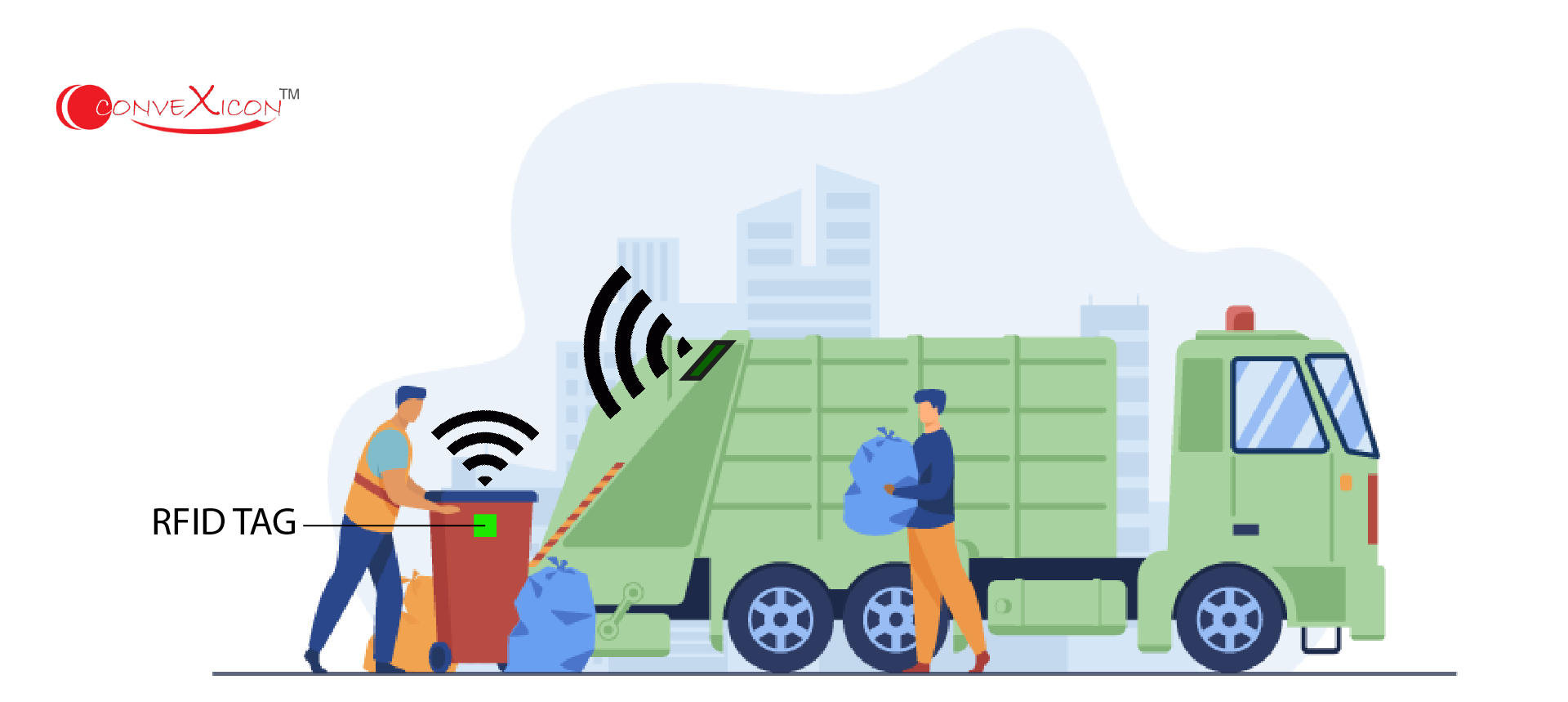
Collection vehicles are equipped with RFID readers. As the vehicle reaches a household or bin:
- the RFID tag is scanned automatically
- there is no need for manual input
- the system records the activity instantly
Each scan captures important details such as:
- exact time of collection
- location of the pickup
- vehicle and route information
This creates a real-time, tamper-proof record of every collection activity.
Over the course of a day, this builds a complete digital trail of the entire route, something that can be directly used for reporting and compliance.
What This Solves
Once RFID is in place, several common operational gaps disappear.
With RFID:
- there are no missed entries due to human error
- every collection point has a recorded proof
- route coverage becomes clearly measurable
- reporting is consistent and structured
Most importantly, it removes the uncertainty around whether a service was completed or not.
This directly addresses the biggest cause of penalties, lack of verifiable data on central monitoring systems.
How RFID Helps Waste Collection Companies Avoid Penalties
To understand the impact, it helps to look at how RFID works in day-to-day operations.
- Every Pickup Becomes Verifiable
In traditional systems, collection is often confirmed through manual logs or supervisor reports. This leaves room for doubt.
With RFID:
- each household or bin is digitally recorded
- every pickup has a time-stamped entry
- data is linked to a specific vehicle and route
This creates undeniable proof of service.
So even if a complaint arises, you have clear evidence to support your work.
- Prevents Data Gaps
One of the most common reasons companies face penalties is incomplete or delayed data.
This usually happens due to:
- manual entry errors
- missed updates
- delays in reporting
RFID eliminates this entirely.
- data is captured instantly
- there is no dependency on staff to update records
- information flows directly into the system
This ensures that what happens on the ground is exactly what reflects on the portal.
- Tracks Route Discipline
Route compliance is another major area where penalties occur.
When RFID is combined with GPS tracking:
- planned routes can be matched with actual movement
- skipped stretches become visible
- reroutes due to real conditions can be justified
Instead of guessing what happened, you have clear data showing how the route was executed.
This helps avoid municipal fines waste management related to incomplete or incorrect routes.
- Supports Real-Time Corrections
One of the biggest advantages of RFID-based systems is that they don’t just record data, they help you act on it.
If a route is incomplete or a section is missed:
- it can be identified during the same shift
- supervisors can alert the team immediately
- corrective action can be taken on the same day
This prevents small issues from turning into penalty cases.
- Aligns with Municipal Monitoring Systems
Modern municipal systems expect structured and reliable data.
RFID generates exactly that.
- data is time-stamped and location-based
- records are consistent and standardized
- integration with central portals becomes easier
This ensures that your reporting matches municipal expectations, reducing the risk of compliance issues.
Reducing Fines in Waste Management Through Better Compliance
When companies adopt proper waste compliance solutions, the focus shifts completely.
Instead of reacting to penalties, they start preventing them.
RFID creates a system where:
- operations are transparent
- every activity is traceable
- performance can be verified at any time
This builds confidence not just internally, but also with municipal authorities.
Over time, this leads to:
- fewer penalty deductions
- better performance ratings
- smoother audits and inspections
- stronger contract reliability
Most importantly, it removes the need to explain gaps after they occur.
Because with RFID, those gaps don’t exist in the first place.
Why RFID Is Becoming Essential in Urban Waste Systems
In today’s environment, waste management is no longer just a service, it is a monitored system.
Municipal expectations now include:
- real-time tracking
- digital proof of service
- data-backed reporting
This is why rfid based waste management solutions in urban areas are becoming a necessity.
Companies that adopt RFID are able to:
- protect themselves from penalties
- improve operational clarity
- maintain better relationships with municipal authorities
Conclusion
The process for assessing waste management penalties now requires proof that workers completed all their duties, rather than just finishing their assigned routes. Centralized monitoring systems create compliance problems because even minor data deficiencies result in monetary penalties.
The implementation of RFID technology in waste collection allows the system to bridge operational gaps through its ability to monitor and record all collection activities with complete accuracy. The system enables operations to function together with their corresponding data, which helps reduce risks while enhancing overall organizational effectiveness.
Convexicon provides the best RFID waste collection software for municipal compliance. It helps to achieve total compliance by enabling you to monitor operations and create reliable records, which will prevent data-related penalties. To know more contact us at: +91 8800443333
FAQ:-
How does RFID help waste collection companies avoid penalties?
RFID automatically records every collection activity, ensuring accurate data and reducing compliance gaps.
Can RFID reduce fines in waste management?
Yes, it provides verifiable proof of service, helping avoid penalties caused by missing or incorrect data.
What is RFID in waste collection?
It is a system that uses tags and readers to track and record waste collection activities.
How do waste compliance solutions work?
They ensure all collection activities are properly recorded and reported to meet municipal requirements.
Why are penalties increasing in waste management?
Because monitoring systems are now data-driven, and any missing or inconsistent data is flagged automatically.