

People only think about public sanitation services when those services stop working correctly. Unclean public toilets make spaces less attractive to people who visit markets, bus stands, and public parks.
Public toilet maintenance for municipal authorities extends beyond building physical structures. The system needs to provide operational facilities that remain clean and open for use throughout all hours of the day. The process becomes difficult when different locations have multiple toilets, which people use at different times.
Public toilets need permanent monitoring because they differ from other civic infrastructure. A facility that receives morning cleaning needs to stay open because heavy traffic will make it unusable after only three hours. The system fails to detect problems such as water shortages and unclean conditions, and maintenance failures, which remain hidden until users raise complaints.
The Public Restroom Monitoring System, which uses IoT technology, develops a new method for restroom management. Municipal teams can monitor facility conditions through real-time tracking instead of using their previous method of conducting regular inspections. The system enables them to improve hygiene practices while increasing their response efficiency through automated processes.
Public Toilet Monitoring Solution in India needs to become a trustworthy system. The health requirements and cleanliness standards keep increasing.
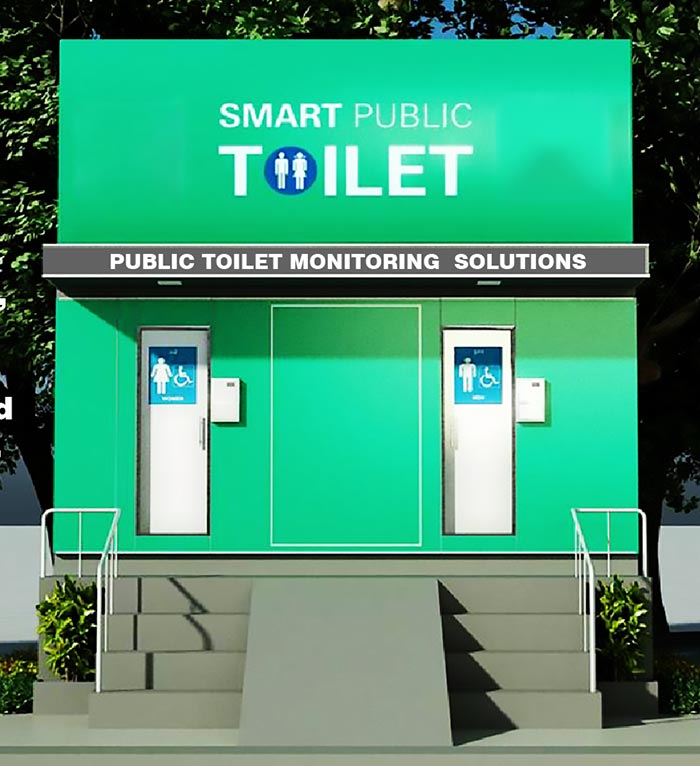
Why Public Toilet Management Needs a Smarter Approach
The management of public toilets requires different approaches than the management of all other city services. The facilities experience nonstop usage because their usage patterns remain unpredictable.
Some locations may see moderate usage throughout the day. In contrast, transport hubs and busy markets experience heavy footfall within short time periods. Fixed cleaning schedules often fail to meet the needs of these situations.
The situation results in these common problems:
- facilities becoming unclean between scheduled cleaning cycles
- water running out without timely refill
- lack of basic supplies such as soap or tissue
- broken fixtures not being reported quickly
- supervisors having limited visibility into actual conditions
Cities continue to conduct manual inspections, which remains their current practice. A team visits a few locations, checks the condition, and moves on. But this approach does not provide continuous monitoring.
The Smart Public Toilet Management and Monitoring System enables continuous monitoring through its system. It replaces periodic maintenance inspections. Municipal teams can detect problems as they arise without needing to wait for citizens to file complaints.
What Is a Public Restroom Monitoring System?
A Public Restroom Monitoring System is designed to give real-time visibility into how public toilets are being used and maintained.
It uses IoT devices installed within the facility to track different aspects of usage and condition. The data collected is then sent to a central platform where it can be monitored by supervisors.
The system usually includes:
- sensors that track footfall or usage frequency
- devices that monitor water levels and supply
- alerts for cleaning or maintenance requirements
- dashboards that display the status of multiple locations
With a smart restroom monitoring system, authorities do not have to rely only on physical inspections. They can see which facilities need attention and act accordingly.
How IoT-Based Monitoring Works in Real Conditions
The strength of a Community toilet monitoring system lies in how it fits into daily operations without making the process complicated.
Monitoring Usage Patterns
The restroom sensors monitor all instances of restroom usage. The data helps determine the necessary time for cleaning.
The system will send a cleaning alert when a toilet receives its third use within a brief time period, which will happen before the next scheduled cleaning.
Assessing Water Supply
Water availability stands as the primary challenge that public toilets face. The facility becomes unusable when the water supply stops functioning.
The Internet of Things devices track both tank levels and water supply conditions. The system creates an alert when water levels decrease past a designated threshold to enable immediate problem resolution.
Supporting Timely Cleaning
Instead of following fixed schedules, cleaning can now be based on actual usage. This ensures that high-traffic locations receive more attention.
It also prevents unnecessary cleaning in areas with low usage, helping optimize staff effort.
Providing Real-Time Visibility
All data collected from the facility is available on a central dashboard. Supervisors can view:
- which toilets are in use
- which require cleaning
- where water levels are low
- which locations need maintenance
This makes it easier to manage multiple facilities across different zones.
Enabling Faster Response
When a problem occurs, alerts are generated immediately. This reduces the time taken to identify and resolve issues.
Instead of waiting for complaints, action can be taken proactively.
Key Benefits for Municipal Operations
The Smart Public Toilet Management and Monitoring System executes practical improvements that enhance the management of sanitation services.
Better Hygiene Maintenance
The organization executes cleaning activities according to actual requirements, which lets them maintain cleanliness throughout their facilities, especially in spaces that experience heavy foot traffic.
Efficient Use of Resources
The organization can allocate staff members and essential supplies to critical locations, which helps eliminate unnecessary work.
Reduced Public Complaints
The regular maintenance of facilities leads to a natural decrease in public complaints.
Improved Visibility
Supervisors can monitor multiple locations without physical presence at each site.
Stronger Accountability
The digital records show which cleaning and maintenance activities have been completed.
Support for High-Density Areas
A Community toilet monitoring system is particularly useful in locations where usage is high and constant monitoring is required.
Role in Smart City Infrastructure
Public sanitation operates as an essential element that drives smart city development efforts. These washrooms remain clean and operational support both public health and urban environmental quality.
A Public Toilet Monitoring Solution in India supports this by:
- reducing dependence on manual inspection
- enabling better coordination between teams
- improving service consistency
- supporting data-driven decision-making
When integrated with other systems such as waste management or water monitoring, it becomes part of a larger, connected urban infrastructure.
Real Impact on Public Sanitation
Cities that have started using smart restroom monitoring systems are seeing gradual but clear improvements.
Some of the changes include:
- more consistent cleaning across locations
- faster response to issues
- better maintenance of facilities
- improved user experience
These improvements may seem small individually, but together they help build a more reliable sanitation system.
What Happens Without Monitoring Systems
Without a proper Public Restroom Monitoring System, public toilet management often faces recurring challenges.
- cleaning schedules are not followed consistently
- issues are reported late
- staff deployment becomes inefficient
- supervisors lack real-time visibility
- facilities remain under-maintained
Over time, this affects both hygiene standards and public trust.
The Road Ahead for Public Toilet Monitoring
As cities grow, sanitation systems will need to become more responsive and better managed.
Public toilet management will increasingly depend on:
- real-time monitoring
- usage-based maintenance
- integration with central dashboards
- improved coordination between field teams
A Smart Public Toilet Management and Monitoring System provides a practical foundation for this shift.
Conclusion
Public toilet maintenance requires more than bathroom facilities because it needs permanent operational standards. A facility that is clean only at certain times of the day is not enough. The crucial aspect of this matter involves whether the facility stays operational for its entire duration.
The Public Restroom Monitoring System establishes that necessary operational standard. The system provides municipal teams with real-time information and usage-based alerts, which enable them to handle sanitation needs more efficiently.
Indian cities that aim to enhance their public sanitation standards should implement dependable Public Toilet Monitoring Solutions because public hygiene standards have reached new heights.
The smart monitoring system developed by Convexicon enables you to achieve better visibility and control over your public sanitation operations by providing monitoring capabilities designed to function in actual environmental conditions.
FAQ:
What is a Public Restroom Monitoring System?
The system uses Internet of Things devices to monitor public toilet usage and cleanliness and maintenance requirements throughout the day.
How does a smart restroom monitoring system work?
The system gathers information through its sensors. It then shows the collected data on a dashboard to assist facility managers with their operations.
Why is a Public Toilet Monitoring Solution important in India?
The system helps maintain cleanliness standards while decreasing maintenance time, and it increases control over facilities with heavy foot traffic.
Can community toilets be monitored using IoT?
The Community toilet monitoring system can track both usage patterns and maintenance requirements. It leads to better operation of communal sanitation facilities.