

In waste management, every route starts with people. The daily work of the organization depends on the active involvement of drivers, helpers, sanitation workers, transfer station staff, and field supervisors. The collection process requires all team members to report on time and complete their verification.
This is why attendance management is far more important in waste operations than it may seem on the surface. Unlike office environments, waste collection depends on strict route timings, shift discipline, and workforce accountability. A delayed driver can push back multiple routes. An absent helper can slow down household collection. Manual registers or supervisor-based roll calls often fail to give real-time visibility into who actually reported for duty.
This is where a Facial Recognition Attendance System becomes highly useful. Instead of relying on paper records, cards, or manual confirmation, sanitation workers can mark attendance instantly through face verification before route dispatch. It makes shift starts smoother, reduces disputes, and gives municipal teams accurate workforce data from the beginning of the day.
For organizations managing sanitation teams, contractors, and fleet staff, a Facial Recognition Attendance System in India is becoming a practical way to improve field workforce visibility and route readiness.
Why Attendance Accuracy Matters in Waste Collection
Waste collection runs on schedules that leave very little room for delay. Most sanitation teams begin operations early in the morning, often before city traffic increases. Every route depends on the timely presence of drivers, helpers, and ward-level workers.
When attendance is not tracked properly, common issues begin to affect the entire operation:
● Collection vehicles leave late
● Household pickups get delayed
● Transfer station teams remain understaffed
● Supervisors spend time verifying presence manually
● Payroll disputes increase for contract workers
In municipal and contractor-led operations, this becomes even more critical because workforce size is large and spread across multiple wards or zones.
A Facial Recognition Based Employee Attendance System helps ensure that the right team is available before vehicle dispatch, reducing uncertainty during shift starts.

Problems With Traditional Attendance in Waste Teams
Many sanitation departments still use manual registers, punch systems, or supervisor-led attendance calls. While these methods may work in small teams, they often create challenges in large-scale waste collection operations.
Some of the most common problems include:
● Proxy attendance where one worker marks presence for another
● Manual entry errors in shift timings
● Delayed verification during early morning dispatch
● Payroll mismatches for outsourced sanitation workers
● Difficulty tracking staff across multiple yards or depots
For route-based waste teams, these issues directly affect service quality. If attendance is unclear at the start of the shift, route completion becomes harder to manage.
This is why many operators are shifting toward a Face recognition based employee attendance system that provides real-time verification without depending on manual supervision.
How Face Recognition Works in Waste Management Operations
The use of a Facial recognition Staff attendance system in waste management is practical and easy to implement.
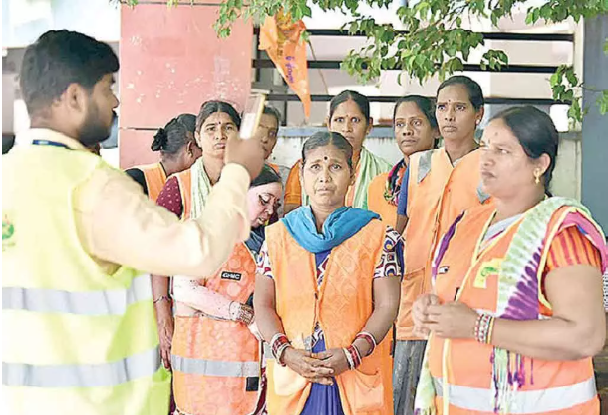
At the beginning of the shift, workers report at the collection yard, transfer station, MRF, or dispatch point. A face recognition device installed at the entry gate or dispatch desk scans each worker’s face and marks attendance instantly.
This process can be used for:
● Vehicle drivers before route dispatch
● Helpers assigned to door-to-door collection vehicles
● Sanitation workers handling street sweeping routes
● MRF and landfill shift staff
● Ward supervisors and field inspectors
The system captures:
● Worker identity
● Exact reporting time
● Shift location
● Assigned zone or dispatch point
Because facial recognition uses unique biometric mapping, proxy attendance becomes extremely difficult. This gives supervisors a reliable picture of who is present before the first vehicle leaves.
Key Benefits for Waste Management Operations
A Facial Recognition Attendance System offers several operational benefits when applied to waste management workflows.
Stronger Workforce Accountability
Each worker must be physically present for attendance to be marked. This reduces proxy attendance and improves discipline across route teams.
Faster Vehicle Dispatch
Drivers and helpers can complete attendance verification quickly, helping vehicles leave on time.
Better Payroll Accuracy
Attendance data is recorded digitally, reducing disputes over overtime, absent days, and shift completion.
Easier Contractor Workforce Monitoring
For municipal corporations working with third-party sanitation vendors, attendance becomes easier to audit and verify.
Better Shift Visibility Across Multiple Depots
A Facial Recognition Attendance System in India is especially useful for operations spread across multiple wards, yards, and transfer stations.
Touch-Free and Practical for Field Teams
Sanitation workers often begin shifts in gloves, with equipment, or after handling field tools. Face recognition allows quick touch-free attendance without slowing operations.
Real Use Cases Across Waste Operations
The biggest advantage of a Face recognition based employee attendance system is that it fits naturally into different waste management environments.
It can be used in:
● Door-to-door waste collection depots
● Landfill and transfer station shifts
● Material Recovery Facility (MRF) operations
● Street sweeping teams
● Smart city sanitation control rooms
● Driver and helper attendance at dispatch yards
This flexibility makes it highly useful for both municipal corporations and private waste management contractors.
Why India Is Moving Toward Smarter Attendance Systems
The use of the Facial Recognition Attendance System in India is growing continuously through its implementation in municipal operations and field workforce activities. Waste management demonstrates this trend because attendance records determine which routes can be operated and which areas will remain clean.
Sanitation contractors and municipal corporations now handle extended route systems that include several outsourced teams, and they must meet more demanding service-level requirements. The increased adoption of smart city programs, together with route-based sanitation contracts, has rendered manual registration methods and verbal attendance verification insufficient.
A strong example comes from Nagpur Municipal Corporation, where a face-recognition attendance system was rolled out for 5,314 sanitation workers across 10 zones. The system was directly linked to salary processing to reduce absenteeism and improve accountability.
For waste management teams, this is not just about marking presence. It is about making sure the right workforce is ready before the first vehicle leaves the yard.
This includes:
● ensuring the right driver is assigned to the correct waste collection vehicle
● verifying that helpers report for their designated route
● confirming outsourced teams are present and ready
● reducing route delays caused by absenteeism or proxy attendance
A Facial recognition Staff attendance system supports these operational goals without adding complexity for field workers. Attendance can be marked in seconds at the yard, transfer station, or dispatch point.
Better Control for Supervisors and Municipal Teams
For supervisors, the biggest advantage is better visibility at the start of each shift. Instead of depending on verbal confirmation, they can instantly check:
- which drivers have reported
- which helpers are unavailable
- which route teams are ready
- whether backup staff needs to be assigned
This improves decision-making during critical early morning operations, where even a small delay can affect waste collection across an entire ward.
Better Control for Supervisors and Municipal Teams
For supervisors, one of the biggest advantages is visibility.
Instead of depending on verbal confirmation, they can instantly check:
● which drivers have reported
● which helpers are missing
● which route teams are ready
● whether backup staff is required
This allows faster decision-making during early morning operations, where even a small delay can affect an entire ward’s waste collection.
Conclusion
In waste management, workforce readiness directly affects route efficiency, service quality, and public cleanliness. The weak attendance systems create problems that lead to route delays, payroll disputes, and field-level confusion.
A Facial Recognition Attendance System helps solve these issues by giving waste management teams a faster and more reliable way to verify drivers, helpers, and sanitation staff before every shift. From dispatch yards to transfer stations, it strengthens workforce accountability and improves operational discipline.
As municipal operations continue to become more data-driven, a Facial Recognition Based employee Attendance System is becoming an important tool for smarter sanitation management.
If you are looking to improve workforce accountability and shift readiness in your waste collection operations, contact us at: +91 8800443333 for a smarter attendance solution built for the waste management sector.