

For employees who work from an office, attendance is fairly simple. They arrive, mark attendance, complete their shift, and leave.
It is different for employees who spend most of their day outside the office.
Sales representatives visit customers. Service teams move between sites. Field executives may have several appointments in one day. Managers need to know whether planned visits were completed, while employees need an easy way to record their work without sending constant updates.
This is where a GPS based employee attendance tracking app can be useful.
GPS can connect an employee’s attendance with location information. But for field teams, attendance is only one part of the picture. Businesses may also need to manage site visits, daily journeys, planned and missed visits, working hours, breaks, leave, WFH, tasks, and reports.
A good system should therefore do more than answer, “Was the employee present?”
It should help businesses understand how the employee’s workday was spent and how their field activities were managed.
What Is a GPS-Based Employee Attendance Tracking App?
A GPS-based employee attendance tracking app is a mobile attendance system that uses location information when employees record their attendance.
Instead of relying only on a biometric machine or manual register, employees can use their phones to clock in and clock out. The system associates that data with relevant location information.
That’s important for people who spend part of their time working outside a set office environment. For example, suppose you have someone on your team responsible for services performed by others, such as a call centre employee. They might spend some time in an office setting during the morning before heading out to visit other customers.
With a traditional system, they are marked as being there all day, but no more than that.
With GPS-based attendance systems, you can also add location information into your employee’s check-in/out process. However, the exact set of features varies between platforms.
For instance, several products are available on the Indian market that integrate GPS attendance with geofencing, route history, site visits, or live location tracking.
For businesses, the important question is not simply whether an app has GPS. It is whether GPS helps solve an actual problem in their daily operations.
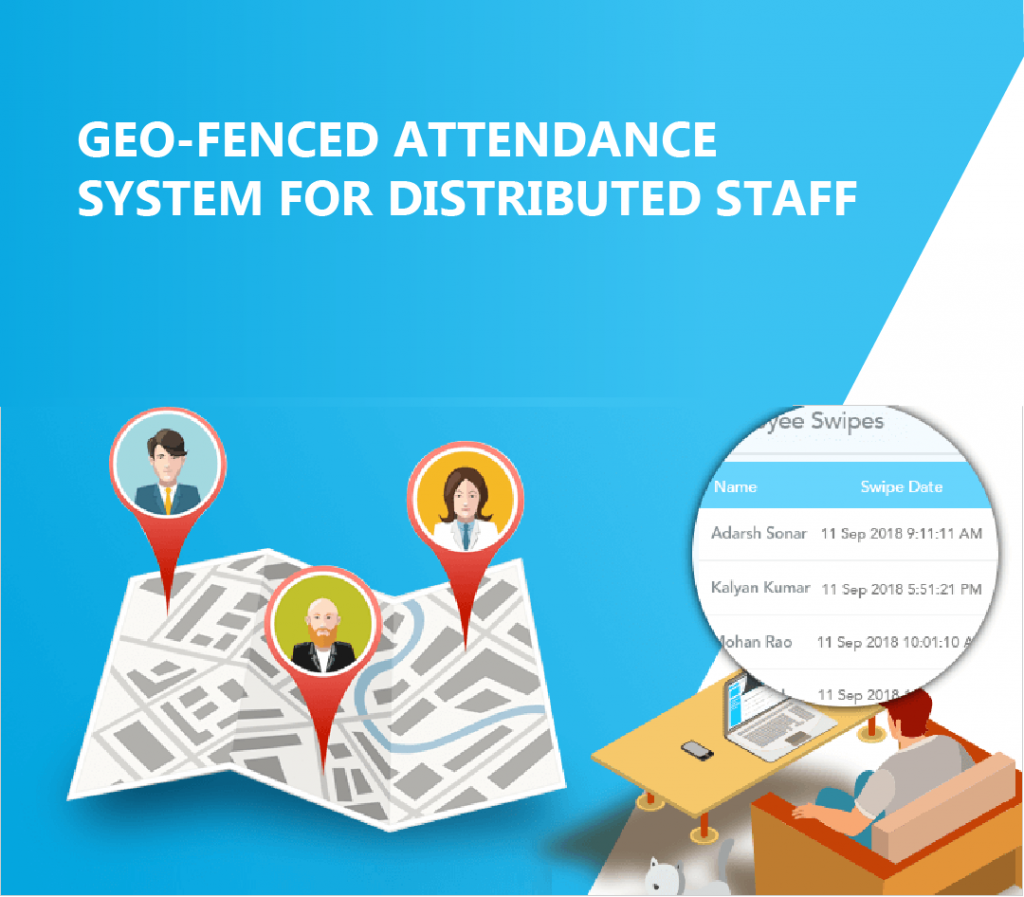
How GPS Attendance Helps Businesses Manage Site Visits
This is where GPS attendance becomes more useful for field-based businesses.
Attendance tells you when an employee started and finished work. Site visit management adds context to that working day.
For example, imagine a sales employee has three customer visits planned.
The employee can use the app to manage their working day while the business gets visibility into the relevant visit information.
Planned Visits
The team can keep track of the locations the employee is expected to visit.
This gives the employee a clear list of what needs to be covered during the day.
Completed Visits
Once a visit is completed, the business has a record of the activity instead of relying only on a later verbal update.
Missed Visits
A missed visit can also be identified.
This is useful when managers need to follow up on an appointment that was planned but did not happen.
Today’s Journey
A journey view can give employees and managers a simple picture of the day’s field movement.
Instead of reading through several messages, a manager can look at the available journey information in one place.
Map View
A map makes location information easier to understand.
Rather than dealing with a list of addresses or coordinates, the day’s visits can be viewed geographically.
Distance or KM Information
For businesses with travelling employees, kilometres travelled can also be useful operational information.
It can help managers understand the amount of field travel involved in an employee’s workday and can support internal travel-related processes where applicable.
GPS Attendance vs Traditional Attendance
The difference becomes clearer when you look at what each system tells you.
| Traditional Attendance | GPS-Based Attendance |
| Records presence | Records attendance with location context |
| Works well for fixed workplaces | Useful for mobile teams |
| Limited information about field work | Can connect attendance with field activity |
| Visits may be recorded separately | Visits can be managed within the same system |
| Travel information may require manual records | Map and journey information can provide additional context |
| More dependence on manual updates | More information is available digitally |
This does not mean GPS attendance is necessary for every business.
If all employees work from one office, a basic attendance system may be enough.
But when employees regularly travel between locations, a GPS based Attendance Management & Tracking System can provide information that a fixed attendance system cannot.
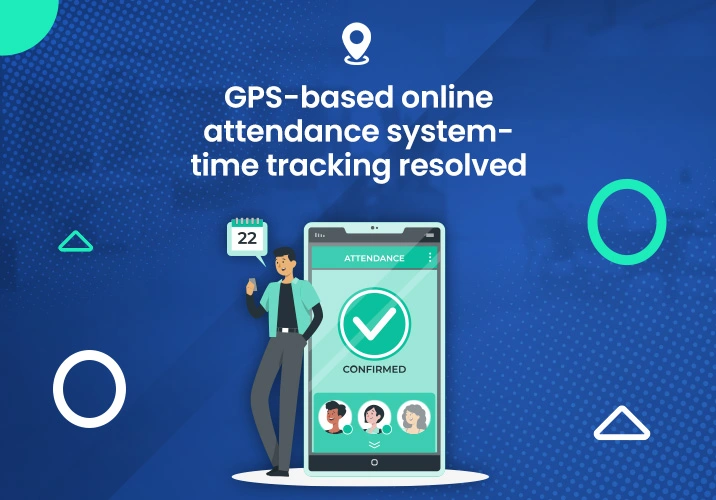
Which Businesses Can Use GPS Attendance for Site Visits?
GPS attendance is particularly relevant for businesses where employees spend part of their working day outside a fixed workplace.
Sales Teams
Sales representatives may have several customer or prospect meetings during the day.
A GPS-enabled attendance and visit system can help organise these activities and provide a clearer record of field work.
Service and Maintenance Teams
Technicians may travel from one customer location to another.
Connecting attendance with site visits can make it easier to understand their daily schedule.
Construction and Project Teams
Employees may work across multiple project sites. A mobile attendance system can be more practical than requiring them to report to one fixed attendance device.
Inspection Teams
Inspectors may need to cover several locations in a day. Visit and journey information can help organise their schedules.
Facility Management Teams
Employees working across client locations can benefit from a system that supports both attendance and site activity.
Multi-Location Businesses
Businesses operating across several offices, branches, or work sites can also benefit from location-based attendance.
The common factor is simple: the employee’s workplace changes during the day.
What Is Geofencing in Employee Attendance?
Geofencing is another term you will often come across while comparing GPS attendance software.
A geofence is a virtual boundary created around a physical location.
For example, a business could create a defined geographical area around an office, project site, or client location. A system with geofencing can then use that boundary when applying location-based rules.
This is different from basic GPS location.
GPS provides location information. Geofencing creates a boundary around a location and uses that boundary for specific rules or actions.
Some attendance platforms in India use geofencing to restrict or verify attendance from approved locations. The exact implementation varies by product.
If your business is considering a GPS-based Geofencing Attendance system for Employees, ask exactly how the feature works.
Does it only verify the location during clock-in? Does it support multiple sites? Can different employees have different locations? What happens when GPS accuracy is poor?
These questions matter more than simply seeing “geofencing” on a feature list.
GPS Is Useful, But Attendance Alone Is Not Enough
One thing businesses should keep in mind when choosing an attendance app is that GPS should not become the entire product.
Employees have more work-related needs during the day.
They may need to apply for leave, request WFH, submit an employee request, check tasks, communicate with colleagues, or review their attendance history.
That is why an integrated platform can be more practical. For example, an employee dashboard can bring together:
- Clock-in and clock-out
- Completed working hours
- Shift timing
- Breaks
- Site visits
- Today’s journey
- Planned and completed visits
- Missed visits
- Map view
- Leave
- WFH
- Requests
- Reports
- Tasks
- Chat
- Announcements
This approach means employees don’t need one app for attendance, another for leave, another for communication, and another for field visits.
How Managers Benefit From Better Site Visit Visibility
Field management often involves a lot of follow-up.
- A manager may need to ask:
- Did the employee start work?
- Which sites were planned?
- Which visits were completed?
- Was any visit missed?
- How did the employee’s journey look?
- How many kilometres were covered?
When this information is spread across calls, messages, spreadsheets, and separate applications, following up takes time.
A connected attendance and field-work system can bring the relevant information together.
This does not mean managers should use the system to micromanage employees.
Instead, it gives them a clearer record of work that has already been planned and completed.
It can also make conversations easier.
If a visit was missed, the manager can look at the available information and ask about the specific issue rather than starting with a vague question about where the employee was.
How LAAYN Helps Businesses Manage Attendance and Site Visits
Employees can now clock in and out, check their complete hours, see information about their shifts, manage breaks, and get an overview of their attendance with LAAYN. And for employees who are working outside of our office. For example, in a field team, they can also track all the site visits they have done today as well as their journey today using this app.
Field teams will find it easier than ever to keep track of their schedule as they’ll be able to see when they have planned visits (and which ones they’ve actually completed). In addition, the entire day’s journey is also displayed in order for them to know where to go next. It even shows you how to reach your destination thanks to integrating directly with Maps!
There’s more than just attendance on offer with LAAYN – you can manage leaves, WFH, employee requests, tasks, chat, announcements, and reports too.
That makes it more than a simple GPS attendance tool.
It gives businesses one platform for managing the parts of the workday that normally end up scattered across different systems.
Conclusion
A GPS based employee attendance tracking app can be useful for businesses where employees do not spend their entire working day at one fixed location.
GPS adds location context to attendance. Site visit management adds another layer by showing what was planned and what was completed. Map and journey information can make field activity easier to understand.
But businesses should look beyond GPS when choosing an attendance solution.
The right system should support the wider workday too, including attendance, breaks, leave, WFH, site visits, tasks, requests, communication, and reports.
For field-heavy businesses, this can make a real difference. Instead of managing attendance in one place and field activity somewhere else, employees and managers can work with the same system.
Manage Attendance Beyond the Office. LAAYN connects attendance, site visits, journey information, leave, WFH, tasks, requests, and reports in one platform, helping businesses manage office and field teams with better visibility. To know more contact us now +91 8800443333.
FAQs
What is a GPS-based employee attendance tracking app?
A GPS-based employee attendance tracking app allows employees to mark attendance through their mobile device while associating the attendance record with location information. It is particularly useful for field and mobile teams.
How does a GPS-based attendance system help with site visits?
It can connect an employee’s attendance with field activity. Businesses can use features such as planned visits, completed visits, missed visits, journey views, and maps to manage site-based work more clearly.
What is a GPS Location Based Attendance System?
A GPS Location Based Attendance System uses location information when employees mark attendance. It can be useful for businesses that need attendance records for employees working across offices, client sites, or other locations.
What is a GPS-based Geofencing Attendance system for Employees?
It uses GPS along with virtual geographical boundaries around defined workplaces or sites. Depending on the software, these boundaries can be used to apply attendance or location-based rules.
Can GPS attendance systems be used for field employees?
Yes. GPS attendance can be particularly useful for field employees because they may work across multiple locations instead of reporting to one fixed office. Site visits, journey information, and map views can add more context to their attendance.